
Nihonto |
I seem to have too much free time today, so I took the image from "Candleabra's" post and marked the matching strokes between his and the known-good examples, using colors to match the strokes. In red color, I marked the differences that I think are most obvious, and a likely indication that they were written by different people. The diffs that I think are the most important are: |
|||

I am having trouble translating the characters on this nakago. It is the reverse of the nakago so I assume its the details of date etc, rather than the smith. Just received the Kokan Nagayama hardback - Connoisseur's Book of Japanese Swords - a very steep learning curve obviously. Unbelievably detailed - I don't know where to start. Cheers Andy |
|||
Dear reader(s), |
|||


I just added this sword it was a nice find at a garage sale . |
|||
Hello- I have had this Wakizashi sword for almost 20 years. It was handed down to me form my Grandfather who served in WW2. I know almost nothing about it and appreciate any comments as to its origin. |
|||

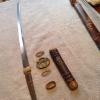
Hi, Just wondering about some very basic or obvious aspects of a signature on a nakago. |
|||
I have another wakazashi where I am having trouble deciphering the tang signature and consequently the age of the blade. I'm told it's Meiji period. Have added photos in a PDF showing tang with signature and also signature on kozuka, which is different. |
|||
Greetings, I just discovered this site and how extensive it is. I was hoping to have some translation help so I can find the Smith on this site and do some of my own research. Thanks for all the help and I'll post pictures of the blade soon. |
|||
Greetings, |
|||
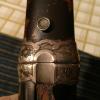
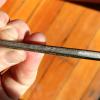

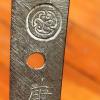
(Accidentally placed in my blog and now re-posted here in this forum) I am new to this club and hope to find some information regarding a WW2 Gunto "Bring Back" sword. |
|||

