
Nihonto |
Dear All, I'm rolling out a new system for handling images in Nihonto Club. It seemed there was always a bit of confusion for new visitors how to attach files and photos to their topics. I'm hoping that the new development will make it more convenient. Over last 4 years I was using different solutions for handling images in different parts of the website (boards, galleries, collections etc) trying to find one which is best fit for the purpose. There were few different ideas on the table, but most importantly I needed to know how you use it. The new system offers treatment of almost every page of certain type (forum topic, collection item, sword record) as a gallery with the possibility of attaching a number of images. Once added, they are available at the bottom of the page. If you click any image, it will bring you to the gallery view where you can browse through images, view their enlarged versions (if available) and leave your comments. You may see examples of attached media on this page. It also allows to maintain information about ownership, copyright and licensing restrictions. It will help us to be fair to people who share their work, as well as open possibilities of using publically available image repositories such as Wikimedia Commons without breaching their Terms & Conditions. This may not be a concern for a classic style message board, but Nihonto Club is (or hoping to be) more like a research tool and we need to think long term. Attaching images and files to the topics on Discussion Boards
Attaching images and files to the existing topic
I hope you'll like the new functionality. Please share your feedback here. Regards, |
|||

There's been a recent increase in the number of requests asking to identify a sword or a signature of the sword. It's a very positive trend and a sign of growing popularity of Nihonto Club. And more so, it's an achievement of few regular members who are kindly responding to these requests. Now it's time to review the process and define how we can do it in an orderly fashion while trying to maximize the value of this activity. I would like to post some guidelines in order to help members and visitors with submission of such requests. While being driven by Nihonto Club management, these guidelines are in no way meant to restrict members' and visitors' freedom of self-expression, but rather to avoid potential legal issues and claims, as well as unhealthy practices and exploitation of Nihonto Club resources with commercial interest. SUBMISSION GUIDELINES 1. Ownership Only the present owner of the sword or a person acting on behalf of the owner can ask for assistance with identification of the sword. 2. Security & privacy Japanese sword can be a valuable property. It is advised to avoid posting owner's personal details, disclose present location of the sword or provide any information which can be used to trace the post to the owner's identity and home address. There is no conspiracy here, just common sense considerations when posting your personal details online. If you do, you do it on your own risk. Nihonto Club will not be held responsible for any loss or criminal damage caused as a result of publishing sensitive information in any section of this website. 3. Commercial interest It is forbidden to ask for identification of swords or other items which are currently available for sale (including auctions). This restriction considers both sellers and actual/potential buyers. Any opinion expressed on this website may potentially affect the value of the sword and it's a general policy to avoid any kind of situations which influence commercial activity. Any person failing to comply with this rule will have his/her account permanently suspended. Any past activity (posted before the publication of these rules) is exempt, if found to be in violation. 4. Copyright restrictions Posters are only allowed to use their own photos, images or other media. Media obtained from the previous owner/seller may only be used with express written permission of the original author and copyright holder. It is welcomed to license your media under Creative Commons License to help other Nihonto enthusiasts in the future. EXPECTATIONS In case if you aren't very familiar with the world of Japanese swords, this section outlines what can and cannot be expected when looking for information about particular sword. It also provides some general considerations about sword handling.
This list will be extended further, if required, at a later date. Your feedback is always welcome. |
|||
Hello Member, I'm a new member making first posting for your consideration and comments. The unverified information I have collected and combined for this purchase is as follows: this Gendaito is a WW2 unknown vet bring home with no tag or info lost in time. The Nagasa is 66cm, motokasane is 7mm, the motohaba is 3cm. the Fuchi wears a Kokura and a SayaShoten marks.Tang along with mei & date(need help as to if it is Oct. or Nov. 1943). It has Star mark, #607 and Matsu (pine). |
|||
Hello, I would appreciate any help anyone could give me concerning the kanji reading in English. My translator app indicates Masayuki Fujiwara. I'm not 100% sure if this is correct. I am trying to discern which Masayuki forged it. I'm attaching photos. Sincerely, |
|||
Hi everyone ! In case there is anybody out there knowing how to use the Nihonto Zuikan (shinto volume, blue one), any help would be greatly appreciated because I had the chance to put my hands on one and I'm quite lost about the way it works. Thanks in advance ! |
|||
Hello, I believe it to be one of these smiths listed by Sesko (probably the San'ami den). From Markus Sesko's Japanese Swordsmiths: |
|||
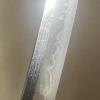
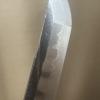
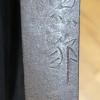
Bonjours à tous, Il y a quelques temps j'ai acquis un Katana authentique. J'aimerai connaître son histoire, son époque et son forgeron ainsi que sa valeur. Je vous joint toutes les photos. Toutes les informations sont les biens venus. Merci par avance à vous tous pour votre aide. |
|||
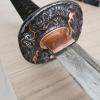
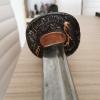
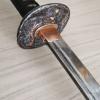
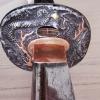
Hi everyone, here's a french newbie asking for help to authentify a blade ! I bought this unokubi zukuri tanto https://nihontoclub.com/items/Shinto-tanto-with-koshirae-by-Kawachi-no-k..., former Norbert Michaud collection, at an auction in Hôtel Drouot (Paris) 2 weeks ago. Could anyone please have a more expert look on this ? |
|||
Attending |
|||
I received a Tanto as a gift many years ago. This Kozuka came in the pocket of the koshirae. I would appreciate any help identifying the signature on the Kozuka and the Kogatana. |
|||

